


What do web designers actually do? A plain-English guide for UK small businesses
What does a web designer actually do — and how can you tell a good one from a bad one? This plain-English guide breaks down the evidence-based decisions behind every page of your website, from homepage layout to Core Web Vitals.
What a web designer actually delivers day-to-day — and what separates good work from bad.

8 min read
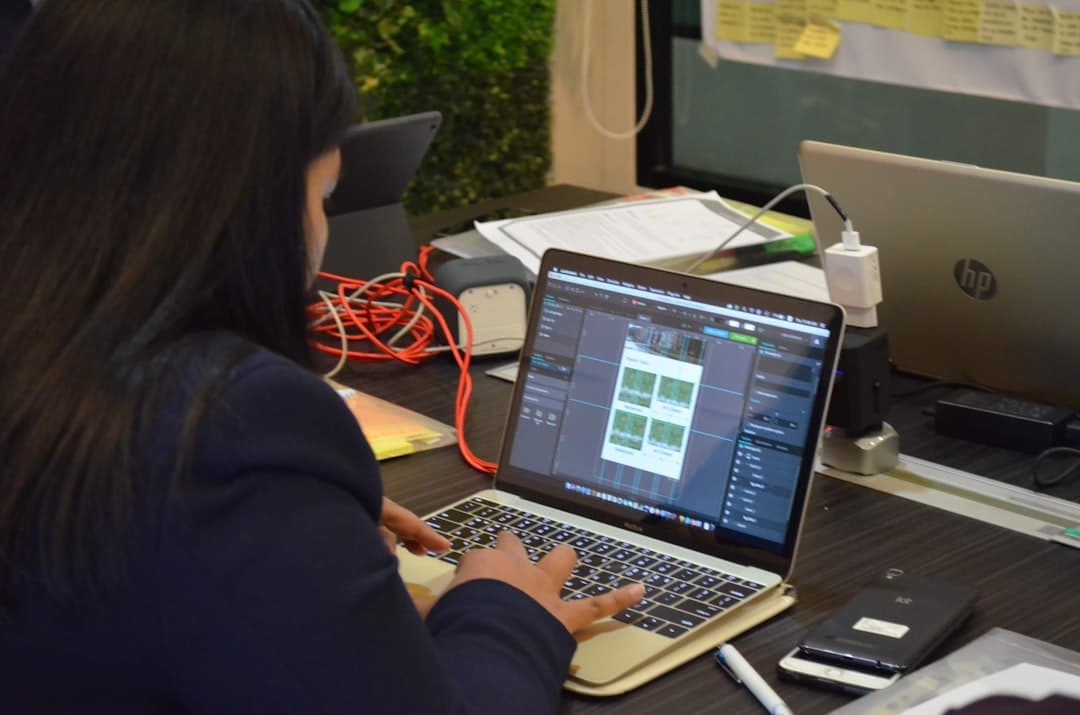
Photo by Belajar UX on Unsplash
A web designer plans, structures, and shapes every page of your website so that visitors find what they need, trust what they see, and take action. The role spans visual design, layout, usability, performance optimisation, accessibility, and content structure — far more than “making things look nice.” If you’re a UK small business owner wondering what do web designers do and whether hiring one is worth the investment, this guide breaks it down in plain English.
Good designers make evidence-based decisions rooted in user research, not personal taste. They draw on findings from organisations like Nielsen Norman Group, Baymard Institute, and Smashing Magazine to build sites that genuinely work for your customers. This post is part of our broader guide to web design for small business.
What do web designers do vs. web developers and UX designers?
The three roles overlap, but they’re not interchangeable. Here’s a quick comparison:
| Role | Primary focus | Key deliverables | Tools of the trade |
|---|---|---|---|
| Web designer | Visual design, layout, brand consistency, usability | Page layouts, colour palettes, typography, responsive mockups, CMS templates | Figma, Adobe XD, WordPress/Shopify theme editors |
| Web developer | Building and coding the functional site | HTML/CSS/JS, server-side logic, database integrations, deployment | VS Code, Git, PHP/Node.js, React |
| UX designer | Research-driven interaction design | User flows, wireframes, usability testing, journey maps | Figma, Maze, Hotjar, user interviews |
At a small agency like ours, a web designer often wears all three hats to some degree. The key distinction is that a web designer’s decisions are visual and structural — they determine what each page looks like, how content is organised, and how users navigate from one action to the next.
What a web designer delivers, page by page
The real value of a web designer becomes clear when you look at the decisions behind each core page of a business website.
Homepage — your first impression, backed by data
Your homepage must answer three questions within seconds: who you are, what you do, and why it matters. Nielsen Norman Group’s homepage research found that only 25% of sites effectively communicate what makes them different from competitors, and just 36% include an explicit tagline summarising what the business does.
A good web designer puts a clear value proposition front and centre — not a rotating carousel. Baymard Institute’s 2025 benchmark found that 75% of sites with carousels implement them poorly. Homepage carousel usage among top sites has dropped from 52% in 2013 to 32%. A List Apart documented a case where a simple change from one column to two columns caused 53.28% fewer sales — proof that layout decisions have real commercial consequences.
Above-the-fold content demands particular care. NNGroup’s eyetracking analysis found that 74% of all viewing time concentrates in the first two screenfuls of a page. Users do scroll, but only when content above the fold is promising enough. Full-screen hero images that create a “false floor” — the illusion that the page is complete — cause visitors to miss everything below.
Services pages — scannable, not hidden behind tabs
Services pages need to help visitors differentiate between your offerings quickly. A web designer structures these as scannable vertical layouts with clear pricing indicators wherever possible.
One common mistake is hiding information behind horizontal tabs. Baymard’s 2025 product page research found that 17.6% of test participants missed tabbed content despite actively searching for it. A collapsed-sections layout or a single long page consistently outperforms tabs.
Contact page — never form-only
NNGroup’s contact page study is emphatic: a contact form should supplement phone, email, and address — never replace them. Visitors expect to see multiple ways to reach you.
For the form itself, single-column layouts outperform multi-column ones. NNGroup’s research found that forms following usability guidelines achieve 78% one-try submission rates versus just 42% for those that break them. A skilled web designer knows these patterns and applies them from the start.
About page — real people, real trust
Baymard’s direct-to-consumer research found that 62% of users actively seek non-product content such as “About Us” and “Our Story” pages. A web designer ensures this page features real team photography (not stock models), a genuine company story, and clear statements of values. Generic stock photography is dismissed by users — authenticity wins.
Blog — summaries over full articles
A well-designed blog archive displays summaries rather than full articles, exposing visitors to a broader selection of topics. Individual posts need a clean reading environment: meaningful subheadings, short paragraphs, and careful typography. The optimal line length is 45–75 characters per line, with body text never going below 16px and a line-height of 1.5× the font size.
The decisions good designers make behind the scenes
Much of a web designer’s value is invisible to the untrained eye. Behind the visual layer sits a set of technical and accessibility decisions that directly affect your site’s performance in search results and its usability for every visitor.
Core Web Vitals
Google measures every website against three performance benchmarks, and your web designer should target all of them:
- Largest Contentful Paint (LCP) ≤ 2.5 seconds — how quickly the main content loads. 40% of websites fail this threshold, making it the most commonly failed metric.
- Interaction to Next Paint (INP) ≤ 200 milliseconds — how responsive the page feels when you tap or click. Only 65% of mobile sites pass INP.
- Cumulative Layout Shift (CLS) ≤ 0.1 — how stable the page is visually (no content jumping around as it loads).
These are not abstract targets. Deloitte research found that a 0.1-second improvement in load time yields up to a 10.1% increase in conversions. 53% of mobile visitors abandon a page that takes longer than three seconds to load.
A good designer also ensures hero images use fetchpriority="high" and are never lazy-loaded, that all images have explicit width and height attributes to prevent layout shifts, and that fonts are self-hosted and optimised for fast rendering.
Accessibility
Accessibility is not an optional extra. Good web designers build to WCAG 2.2 AA standards as a baseline, which means sufficient colour contrast, a logical heading structure, keyboard navigability, and tap targets of at least 44–48 pixels on mobile.
Progressive enhancement
Rather than building a JavaScript-heavy site and hoping it works everywhere, experienced designers start with clean, semantic HTML, layer CSS for presentation, and add JavaScript only for enhanced behaviour. The result is a site that works for everyone — regardless of device, browser, or connection speed.
For our web design service, these behind-the-scenes decisions are standard on every project.
How to tell if a web designer is any good
So how do you spot a designer who actually does all this? When shortlisting agencies or freelancers, look for these six signs:
- They show real portfolio work — not just screenshots, but links to live sites you can test yourself.
- They talk about Core Web Vitals targets — if they can quote LCP ≤ 2.5s and explain why it matters, they understand modern web performance.
- They write for your users, not the brief — their copy and layout decisions focus on what visitors need, not what looks impressive in a pitch deck.
- They plan content structure before opening a design tool — sitemaps and wireframes come before colour palettes.
- They set up the CMS properly — custom fields with clear labels and guidance, so you can update your own site without breaking the design.
- They measure performance after launch — a good designer checks real-user data (not just lab tests) and makes adjustments.
Frequently asked questions
What skills does a web designer need?
A web designer needs visual design skills (layout, typography, colour theory), a solid understanding of HTML and CSS, familiarity with CMS platforms like WordPress or Shopify, and knowledge of usability principles backed by research. Soft skills matter too — a designer must translate business goals into user-friendly page structures.
Do web designers also code?
Many do, particularly at smaller agencies. A web designer who understands HTML, CSS, and basic JavaScript can build and refine designs directly in the browser, which speeds up the process and reduces miscommunication with developers. At Lightly Salted, our designers work hands-on with code.
How long does a small business website take to design?
Timelines vary depending on the content readiness, and feedback cycles. The design phase — wireframes, visual design, and responsive layouts — is usually the most time-intensive stage. Your agency should give you a clear project plan with milestones before work begins.
How much does a web designer cost in the UK?
Rates vary widely depending on scope, complexity, and whether you hire a freelancer or an agency. [STAT NEEDED: UK web designer average project cost or hourly rate from a verified industry survey] Ask for a detailed quote that breaks down exactly what’s included — transparent pricing is one of the clearest signs of a trustworthy designer.
Ready to talk about your website?
Now you know what web designers do — and what separates thoughtful, evidence-based work from a paint-by-numbers template job. If you’re a small business owner who wants a website that genuinely works, we’d love to hear from you. Book a no-obligation discovery call and we’ll walk through what a web designer could deliver for your specific business.
Related articles

Web design for small business: the complete guide for UK SMEs
Small business web design is often oversold on trends and undersold on fundamentals. This guide breaks down what actually drives customer action: responsive layouts, Core Web Vitals, WCAG accessibility, and cost discipline—with practical checklists for WordPress, Shopify, and site evaluations.

Accessible Web Design: A Practical Guide for WordPress and Shopify Sites
Approximately 350 million people have colour-vision deficiency. Missing focus indicators and ARIA attributes are among the most common accessibility failures on WordPress and Shopify sites. Learn the code-level practices that win both search and user trust.
How to choose a Shopify agency: what UK businesses should ask before hiring
Hiring the right Shopify agency can transform your e-commerce store — but choosing the wrong one can be costly. Discover the key questions to ask, red flags to watch, and how to evaluate a Shopify expert’s credentials.
Ready to grow your business online?
Let's build a website that works as hard as you do.
Mon–Fri, 9am–5pm
— or —
Free 30‑minute consultation
24-hour response guarantee
We'll get back to you within one business day, every time.
No hard sell, ever
Just an honest conversation about whether we're the right fit.
Talk to the people who'll do the work
No account managers or middlemen. Meet your actual team.